creative direction with ai · · 4 min
The Missing Link Between Vibe Coding and a Design System
This ties my traditional skills to the new AI, and shows how I can orchestrate a whole end-to-end system that accelerates the process without sacrificing quality.
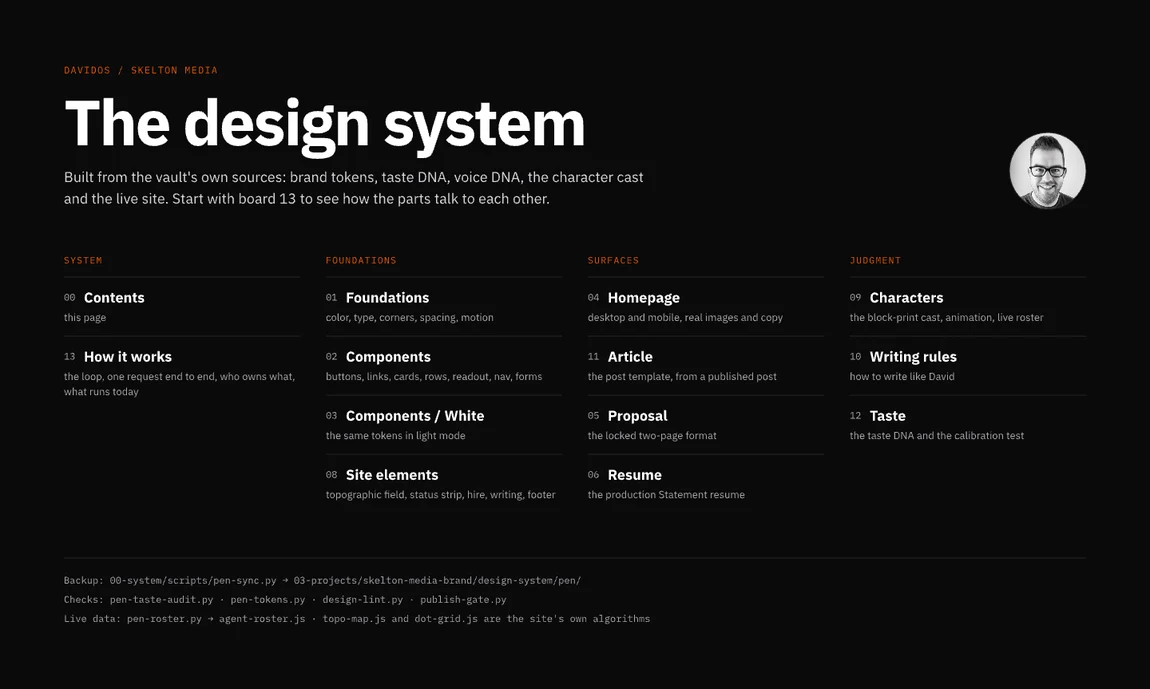
I've always been in Figma, meticulously creating and learning to hand off to engineers, and watching them code. But it never quite matches up. Hypotheticals meet reality, and oftentimes the sacrifices made feel out of a designer's control.
When I started working with Claude Code, I had glimpses of the future, but Figma was always the hurdle. pen.dev takes it to the next level.
I launched a site without design files
For this project I started building exclusively in Claude Code, meticulously building my style into a site, and launched it without any true design files. But that's not always the best way to keep tabs on all of the outputs.
pen.dev solves that by taking work you've already done and bringing it together into a more traditional, editable design system, using MCP to tie it all together without any manual work.
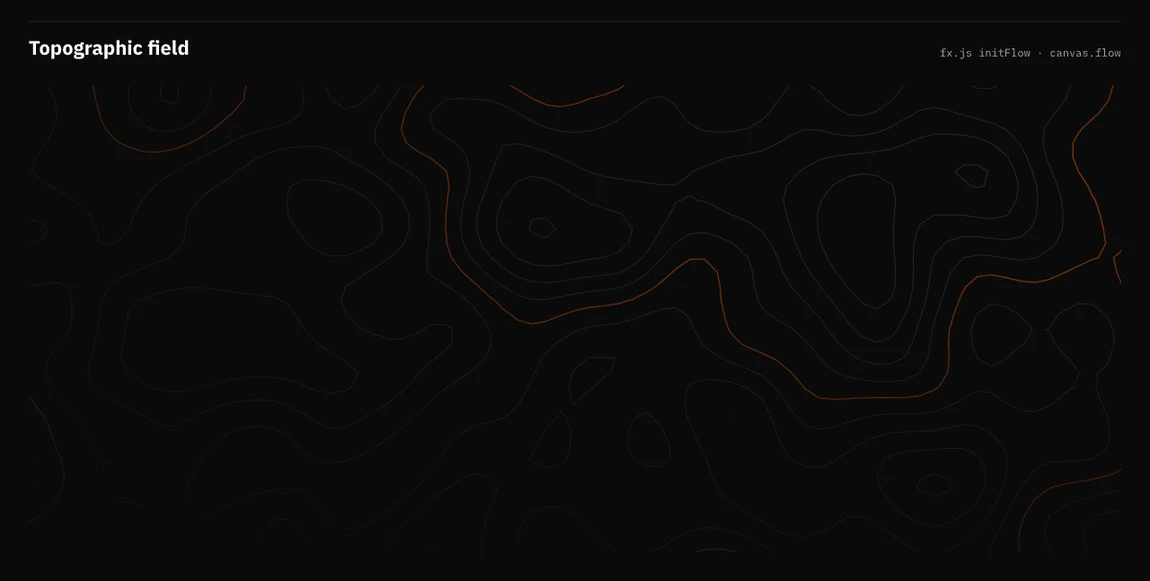
It becomes the connective tissue between vibe coding and a system I can see, feel and manage, in a tool that feels like Figma but is free and has no clunky hurdles to get over.
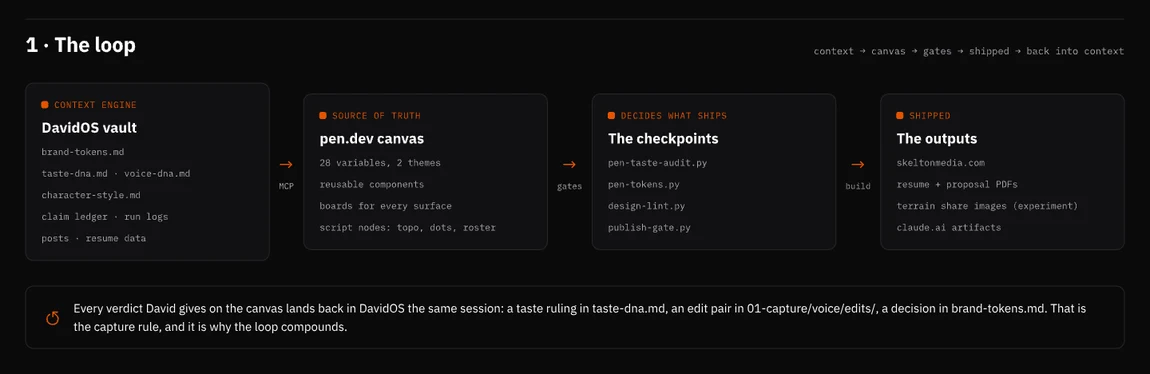
The context came first
Months before the canvas, Claude and I wrote the rules down in DavidOS, one decision at a time.
- Voice, from May. Real samples of how I write, the phrases I never use, and later the rules: answer first, no em dashes, no widows.
- Brand tokens, from July 30. IBM Plex, one orange, and since November 11 a black and white ground with the cream retired.
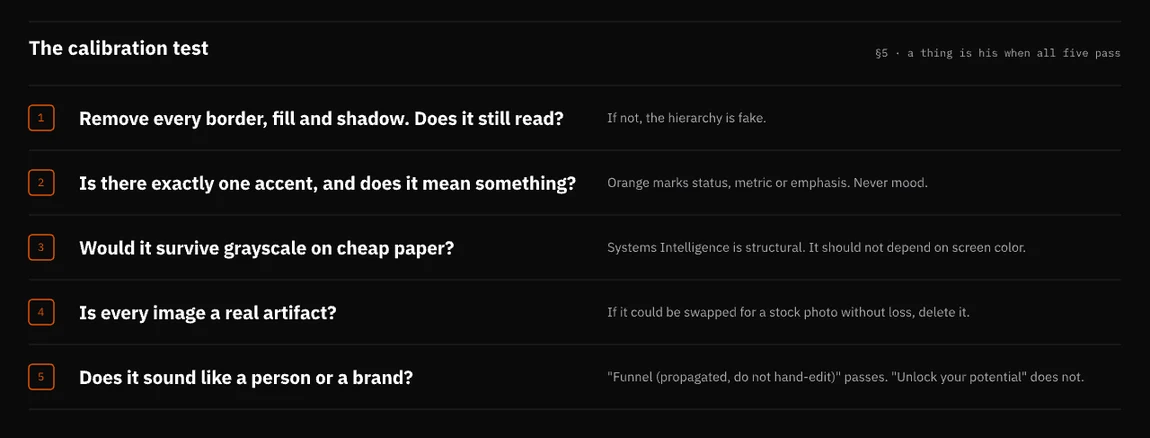
- Taste, from August 21. Every line traces to a decision on the record, plus a five-question test for whether something is mine.
- The site. Built in Claude Code alongside those files, the two shaping each other, and launched with no design files.
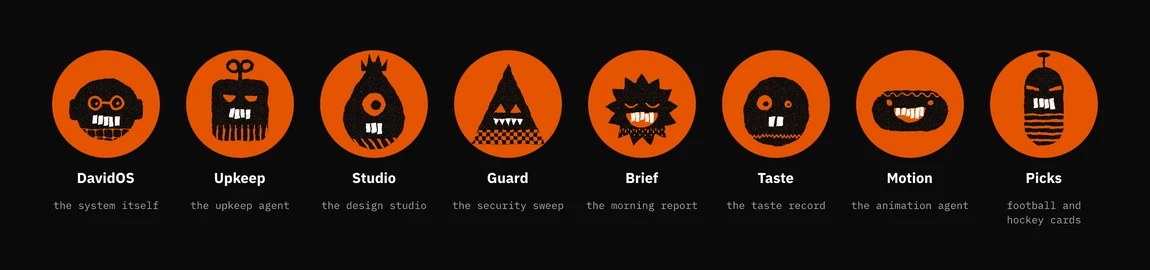
- The characters, November 14. A block-print creature for DavidOS and one for each agent.
Then the canvas, in one session
On November 16 Claude read all of that through MCP and laid it out in pen.dev, fully editable.
- Tokens became variables. 28 of them, in dark and light.
- The site became components. Buttons, cards, rows and the nav, from the site's own stylesheet, then the pages rebuilt with real copy and real images.
- Code came over as code. The hero's contour field and the dot grid run on the canvas as scripts ported from the site, not redrawn.
- Documents joined. The resume imported from its production generator, the proposal format, a cover letter.
- The judgment got boards too. Writing rules, taste, and the character cast.
How it syncs back and forth
- Vault to canvas. Claude reads the rules through MCP, and a script draws the agent roster from the run logs.
- Canvas to vault. A sync script copies the canvas into DavidOS, where it is versioned every night.
- Canvas against the site. A check compares the canvas tokens with the site's CSS in both themes and names any drift.
- Before I see a board. The taste test runs on it, and the banned phrases come straight from my voice file.
- My verdicts. Every decision I make on the canvas is written back into DavidOS the same session, so the next draft starts closer.
Not everything is automatic yet. A change on the canvas does not rewrite the site; the check reports it and a person applies it. The roster and the backup run by hand for now.
The missing link
I had used pen.dev before, but it didn't really click. It wasn't until I let Claude Opus 5.5 loose on my codebase, and the context from all the outputs I had been building in Claude Code, that it came together into a single canvas with all the elements organized and documented for me to build on.
As a visual designer, this is the missing link for me. It gets me the best of both worlds.
Claude is still my engineering tool, and it literally brings these to life without any coding. It's following my rules to a T, it's arguably more precise than I could be on my own, and it's much quicker and more enjoyable to iterate on and experiment with.
It's one of the biggest aha moments I've had since working with AI, in my years of experience learning to build.
Who this is for
This is for anyone who's curious about the capabilities of the tools available, especially anyone looking outside of Figma to run their design systems, and how we start thinking longer term about agents managing our design systems in real time.