writings · · 5 min
Teach the AI Your Taste
How to have AI think like a designer, lock in a vision, and hold it accountable to it. A free skill pack and the blueprint behind it.
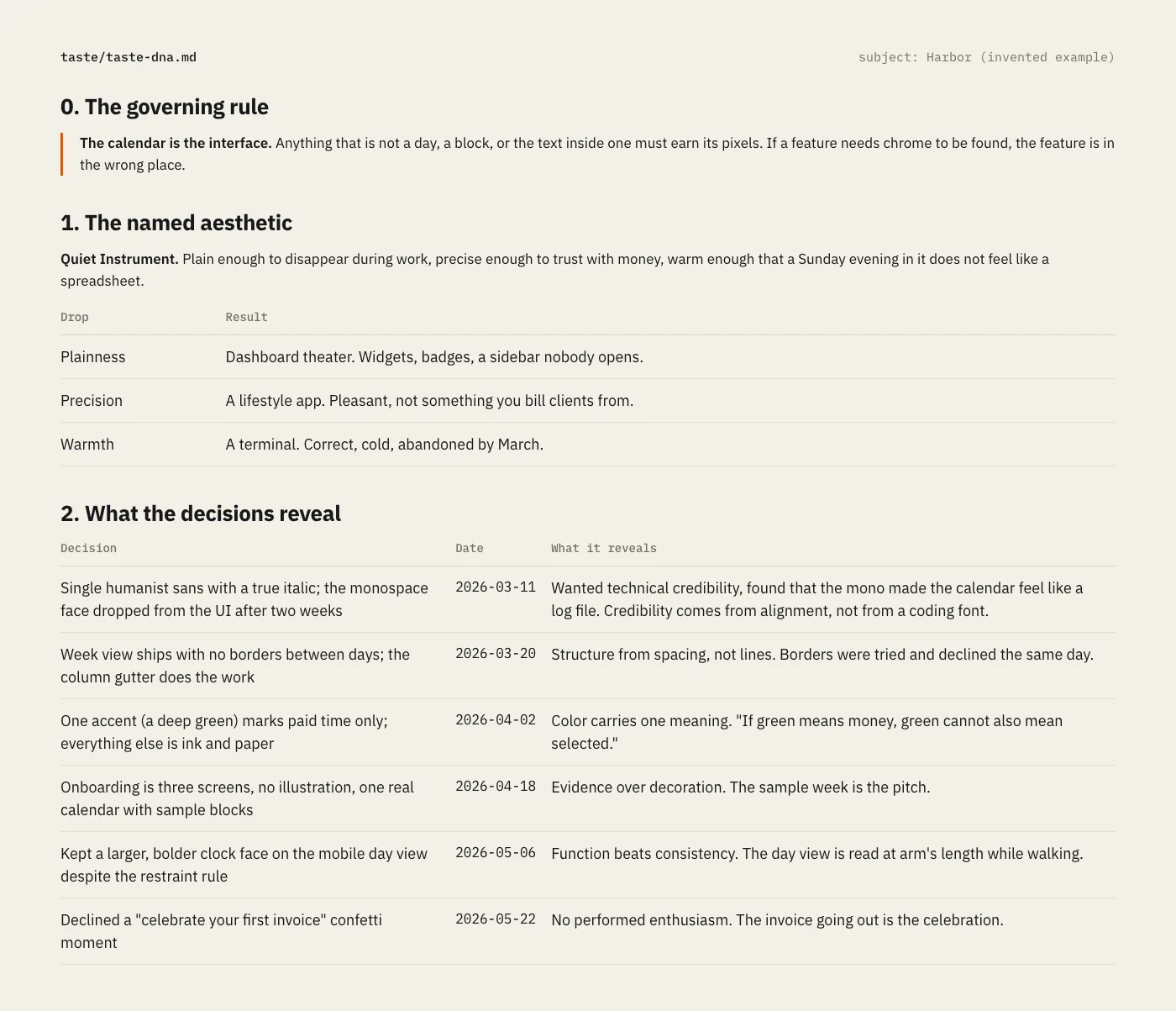
Everyone is going to be able to be a designer. As models get better at doing the work, the need to build taste and a brand that is excellent and your own is going to go up, not down. That is how you stand apart when the making is cheap.
So the question for designers figuring out AI is not "can it design". It can. The question is whether it can design like you. Out of the box it cannot, because it has no taste of its own. It has the average of everyone's. Every centered hero with three feature cards and a gradient blob is that average showing through.
This post is about the fix I use. It comes in three moves: get the AI to think like a designer, lock in a vision, and hold it accountable to it. I packaged the whole thing as a free skill pack, design-taste-skills, and wrote the method up as a blueprint so you can rebuild it for anything you want an agent to hold steady.
Think like a designer: taste is recorded judgment
Taste is not a mood board. A mood board is a pile of things you liked on a Tuesday. Taste is what you chose, what you declined, and why, written down clearly enough that someone else could make the next call the way you would.
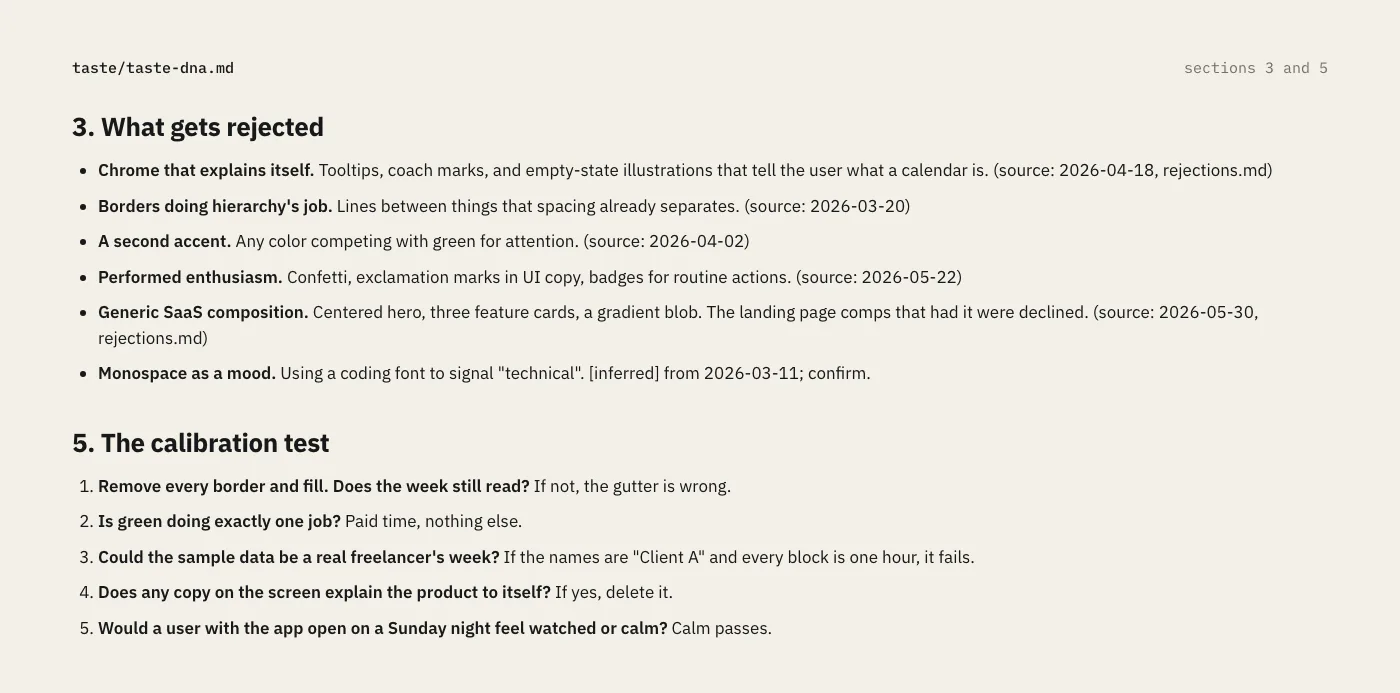
That "written down" part is the whole trick. An AI assistant will read a file before it works if you tell it to. So the file is where the taste lives. In the pack it is called taste-dna.md, and it has eight fixed sections: the governing rule that wins when two others conflict, a named aesthetic described as forces in tension, a table of dated decisions and what each one reveals, what gets rejected, where effort goes and where it never goes, a five-question calibration test, open tensions, and proposals waiting on you.
I have kept a file like this for my own work since August. The thing I did not expect is how much of it is the no. Seven declined logo options say more about a designer than any list of adjectives, and the rejection log is the file that stops the assistant making the same mistake twice.
Lock in a vision: the interview, not the adjectives
You cannot list your taste. Nobody can. You can react. The pack's interview takes three to seven references and runs four moves on each: what did you notice first, what specifically is doing that, would that one move transfer to your work, and what did the design give up to get it. The assistant never supplies the vocabulary. Your reached-for words go into the file, quoted.
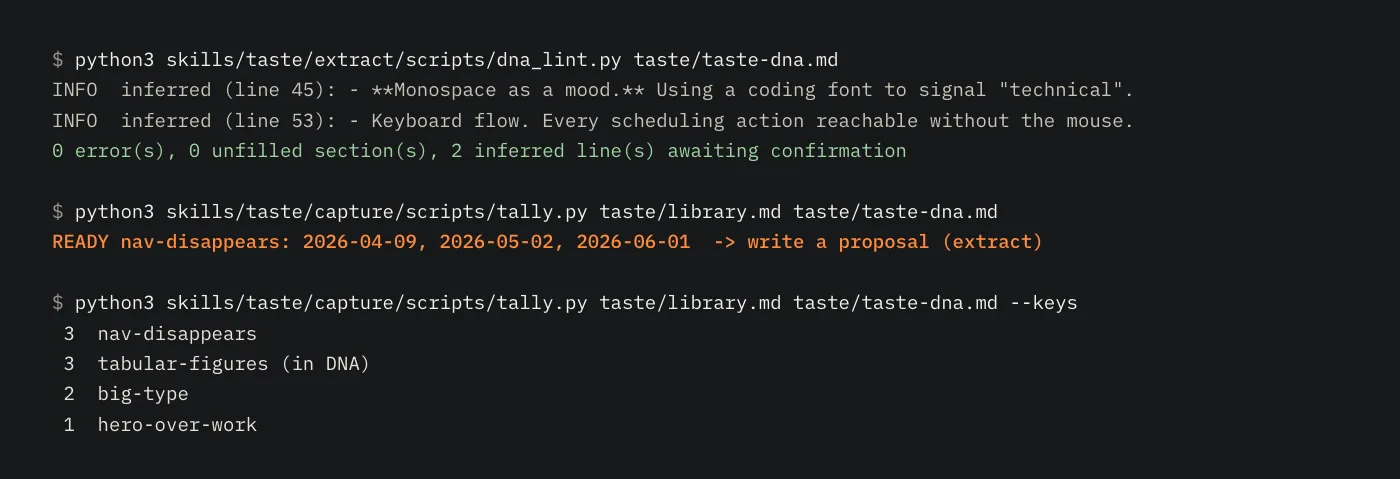
Then the evidence bar. A signal from one reference is a data point. The same signal across three separate sessions is taste, and only then does it get proposed as a line in the file. Anything the assistant inferred rather than heard is marked [inferred] until you confirm it. The assistant proposes. You promote. That one rule is the whole governance model, and it is why the file stays yours instead of drifting toward the average again.
Hold it accountable: review before and after, cite the line
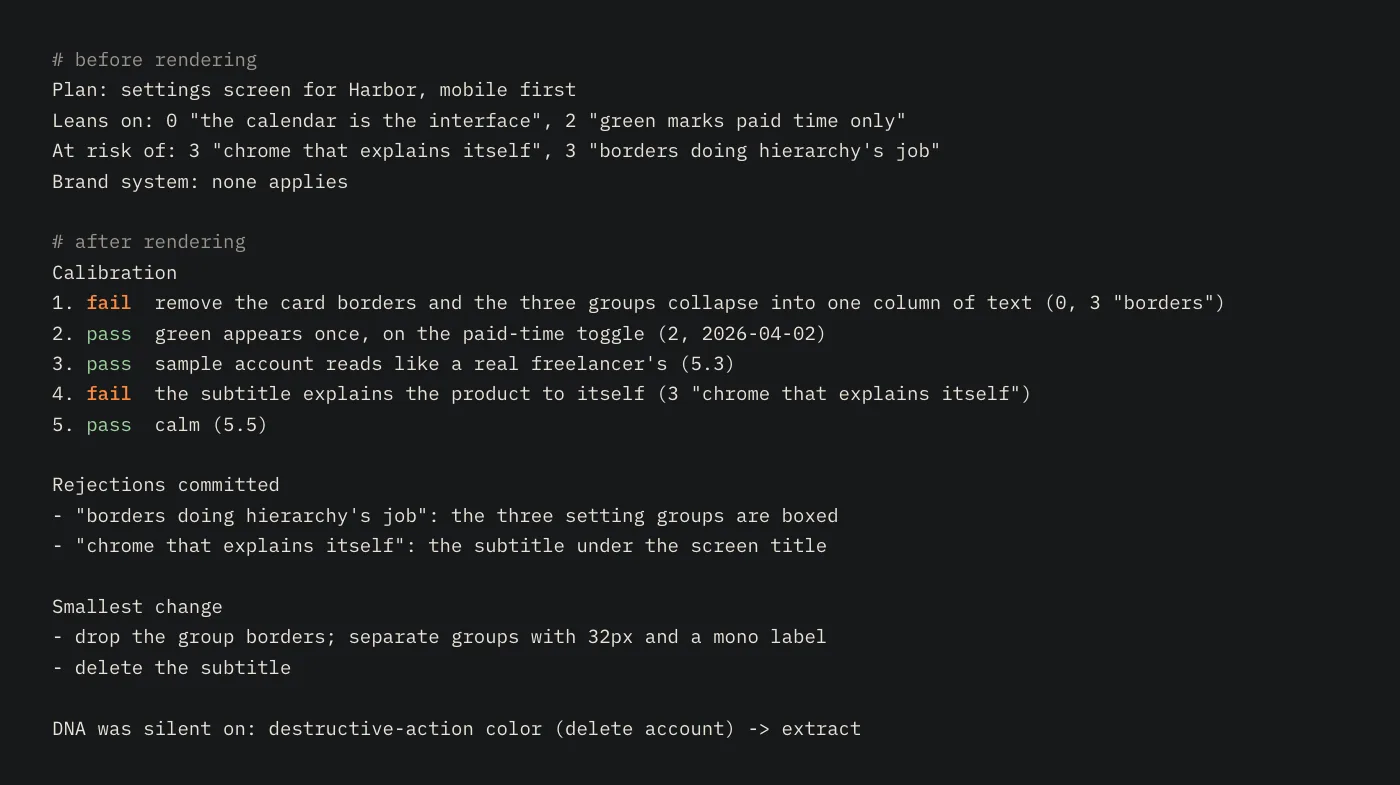
This is the move most people skip. Before the assistant renders anything, it restates the plan in three lines: what the work is, which lines in the file it leans on, and which rejected moves it is at risk of making. A plan that cannot name a single line is generic, and it stops there.
After rendering, it runs your five questions. Every verdict cites the line it rests on. A failure names the element and the one change that clears it. A pass is one sentence, with no suggestions bolted on. And it never loops on its own critique. A critic talking to itself plateaus; you are the loop.
Free, and a blueprint
The pack is six small skills in the open Agent Skills format, so it runs in Claude Code, Codex, Cursor and anything else that reads a SKILL.md. Setup creates the folder. Interview, capture and extract fill it. Apply holds the work to it. Three scripts run without any assistant at all, so the files stay useful on their own. MIT license, no paid tier.
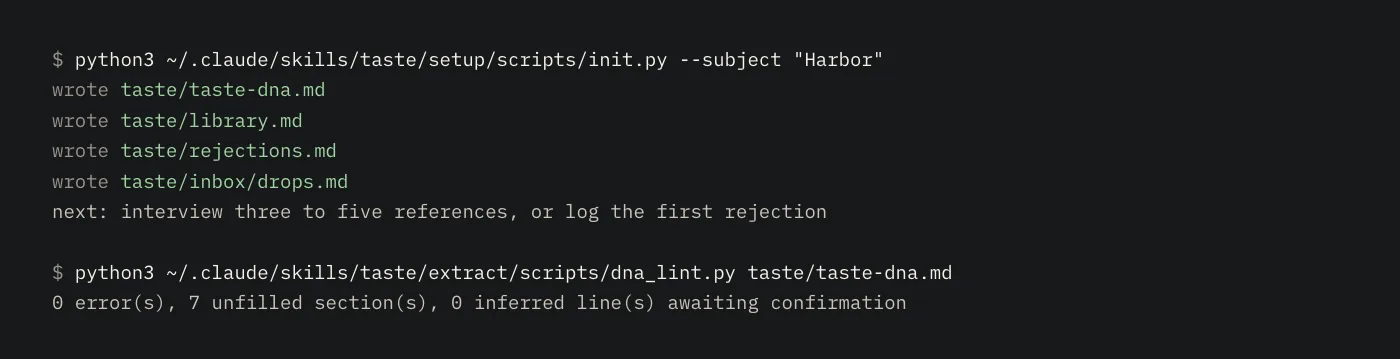
I wrote it for designers who are new to agents, and I wrote the blueprint for everyone else. The pattern underneath (a governing file, an evidence bar, a tally, proposals the human promotes) is not about design. Swap the eight section prompts and the five questions and it holds a writing voice, a code review standard, or a brand just as well.
Install it, interview yourself on five sites you admire, and read what comes back. The first time the file catches the assistant reaching for the average, you will see the point.