under the hood · · 2 min
Under the Hood: This Site
This site is generated from markdown by the same system it describes. The build script, the content rules, and why there's no CMS.
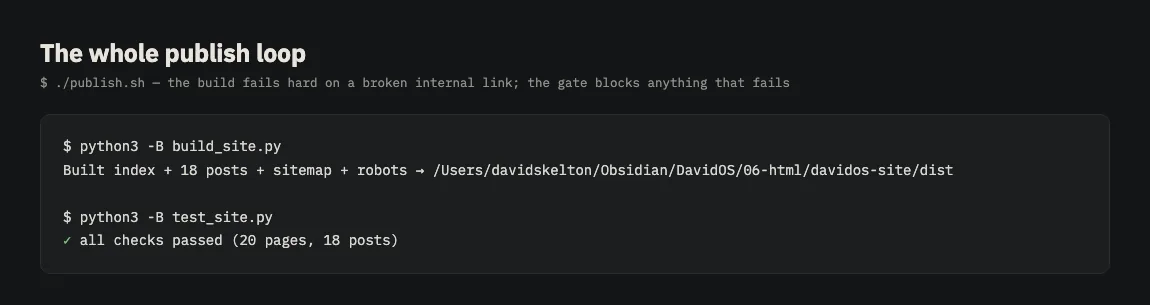
You're reading the artifact, so this one can be concrete. This site replaced my Squarespace and was built in a day of iteration between me and my OS. Here's the actual loop.
The direction
I started with a feeling, not a spec: my old portfolio said designer; nothing about it said operator. The direction we landed on, "editorial terminal," makes the OS itself the visual language: a manifest block beside the hero, run-log entries as content, a live status strip. My brand tokens, but the system's voice.
Iterations, honestly listed
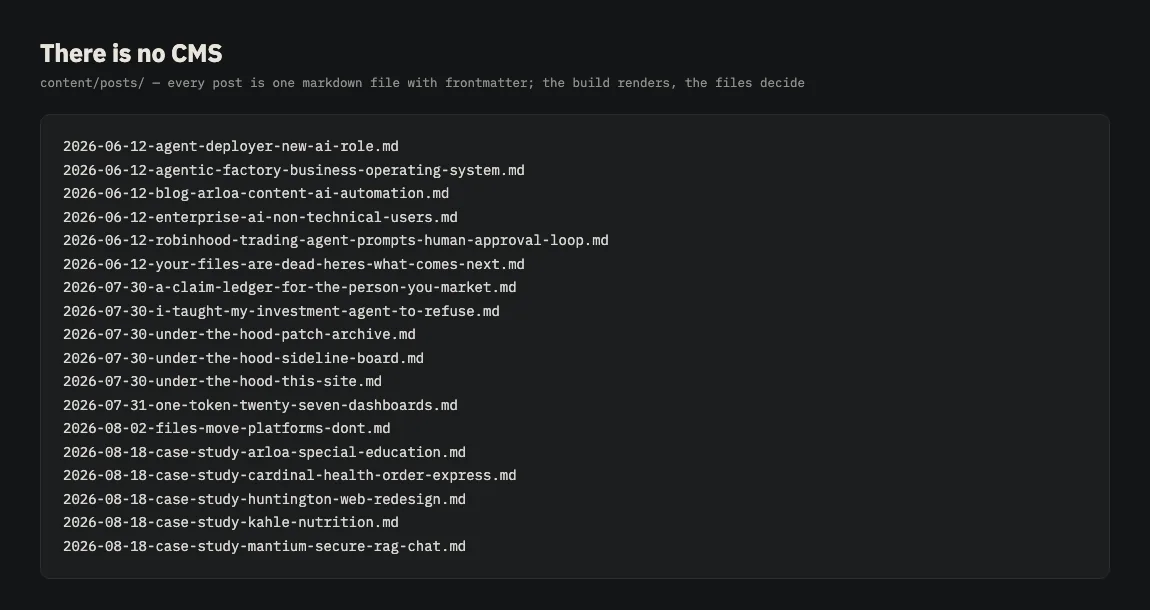
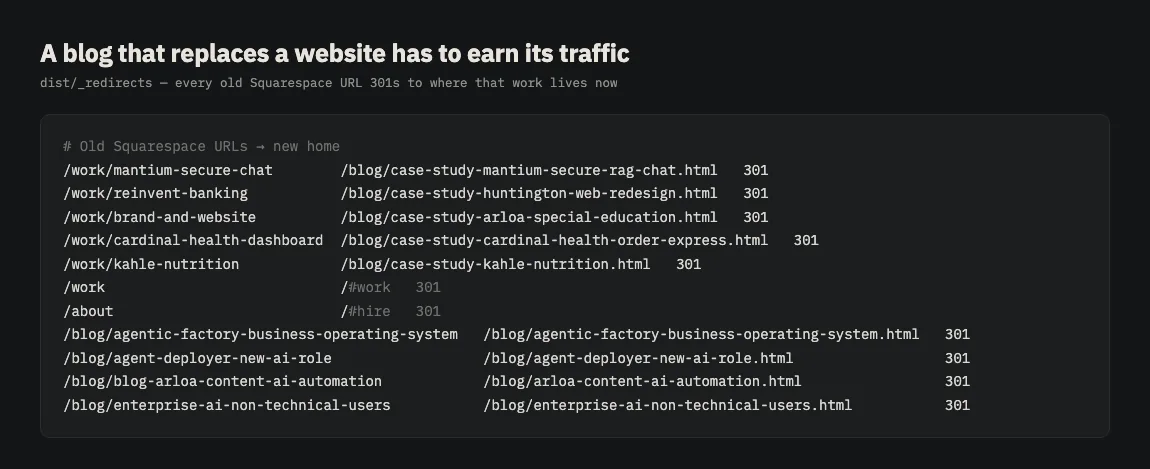
- One page → pages. My own review caught it: reading felt like infinite scroll. We broke posts into real pages with category shelves, back arrows, and prev/next, then gave every page canonical URLs, structured data, and a sitemap, because a blog that replaces a website has to earn search traffic.
- The fonts escaped the site. I liked the type so much I made it official everywhere. The OS swapped the tokens across 27 internal dashboards the same afternoon.
- Accessibility beat the brand color. When I said dark mode had to pass ADA basics, we didn't eyeball it. We computed contrast ratios. My orange failed on cream at small sizes: 3.3:1 against a 4.5:1 requirement. The fix wasn't abandoning the orange; it was a second token: a deeper orange for small text, the pure brand for bars and big display. Dark mode already passed. Now both do, by arithmetic.
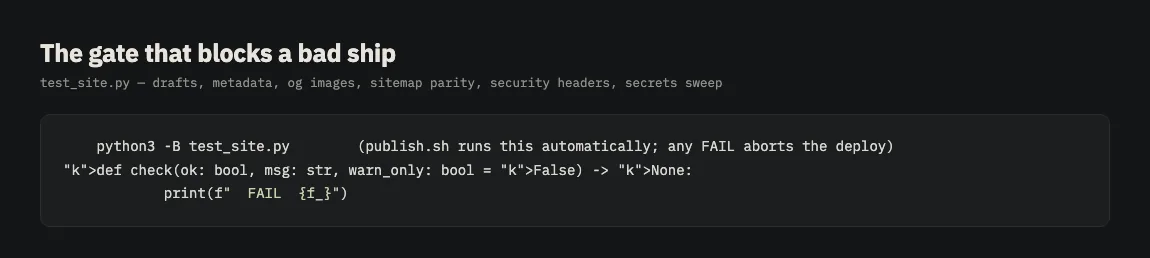
- Drafts can't ship. The build excludes any post I haven't approved and prints what it skipped. The governance rule isn't in a style guide; it's in the compiler.
The part clients should care about
At no point did I type "make me a website" and accept what came back. Every loop was: I name a constraint or a discomfort, the system proposes and measures, I judge. The measuring is what makes AI collaboration professional instead of lucky: contrast ratios instead of "looks fine," verified claims instead of confident copy, a draft gate instead of good intentions.
That's the service, whether the deliverable is a brand system or a production pipeline: taste plus governance, at AI speed.