under the hood · · 3 min
Under the Hood: The Patch Archive
Rebuilding a military patch archive with an agent pipeline: research, redraws, and a render script that turns markdown records into a browsable site.
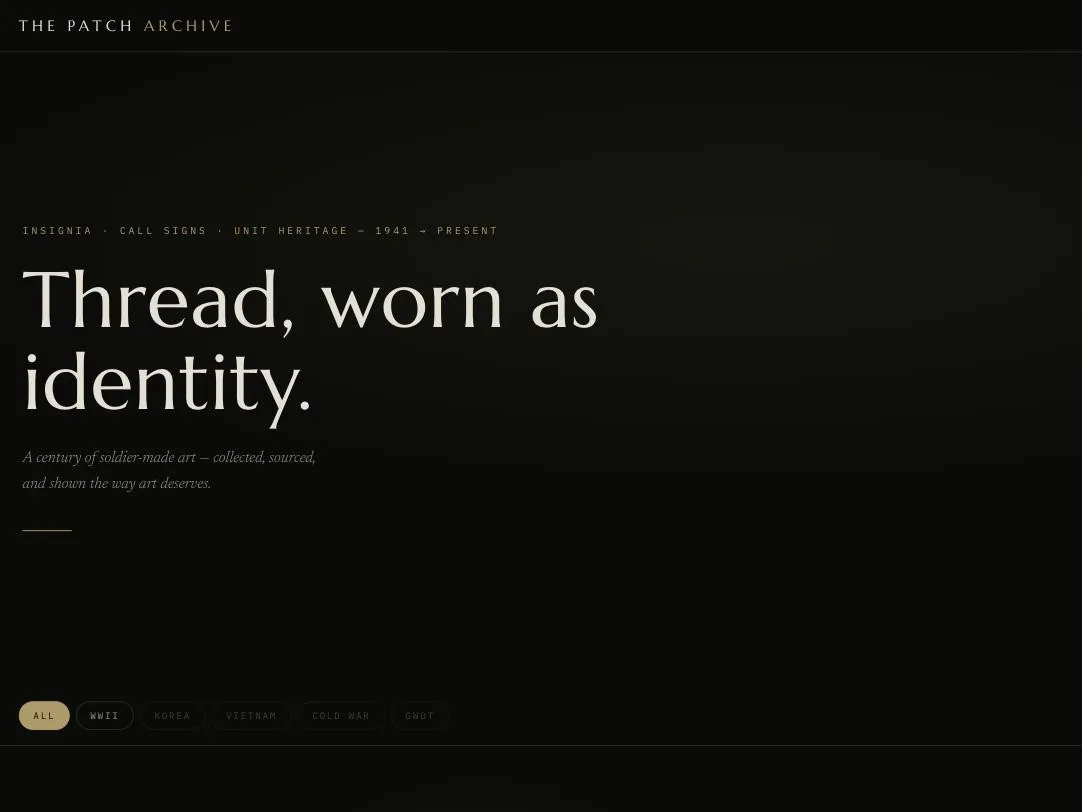
I collect the stories behind military patches. Soldier-made art, worn as identity. I wanted a home for them that treated the work the way an archive should. Here's how the build actually went, because the process is the part people ask about.
The brief
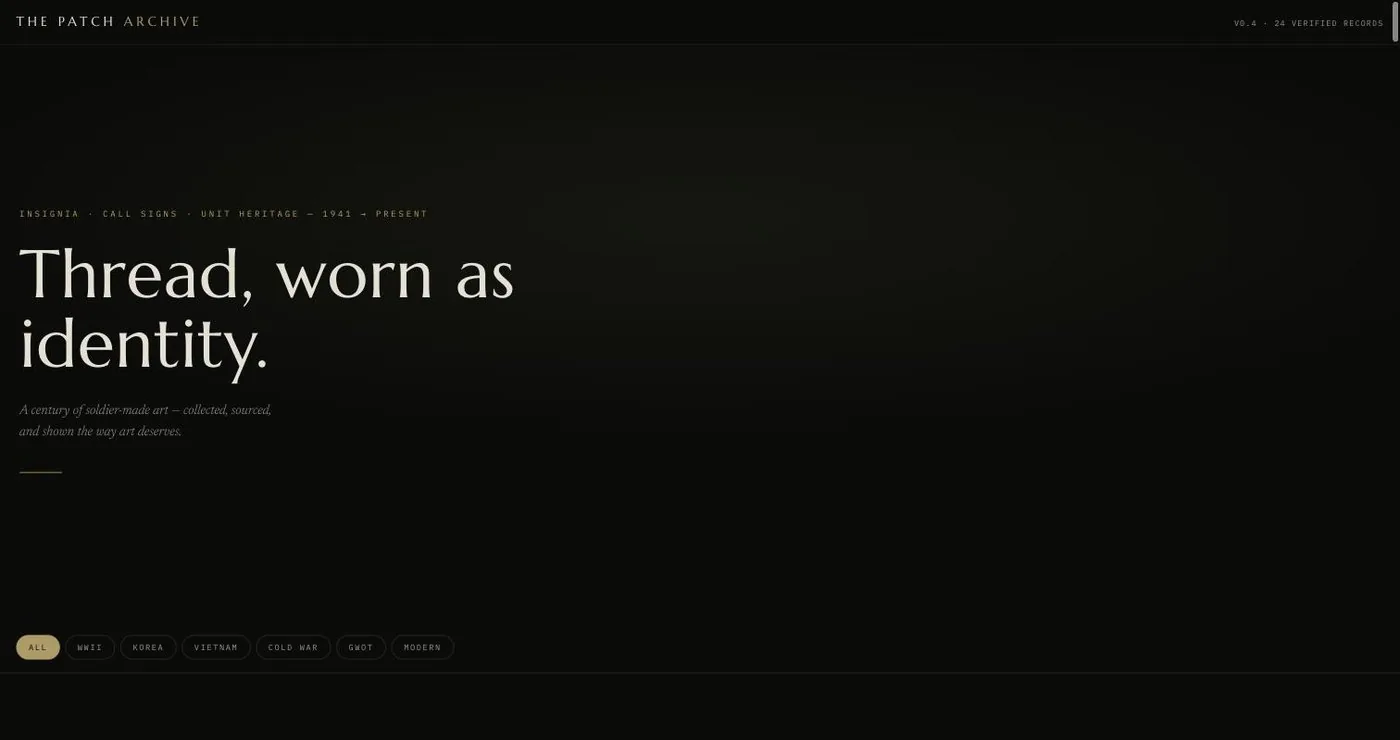
I didn't ask for a website. I asked for a collection with standards: every patch entry needed provenance, sources, and era context, and the design had to feel like a gallery, not a database. Dark, minimal, mobile-first, so you should be able to browse it from a couch.
The AI's first move wasn't design. It was structure: a content schema, a research-sources file, and a research queue, all before a single pixel. That ordering matters. When the structure exists first, the design has something true to express.
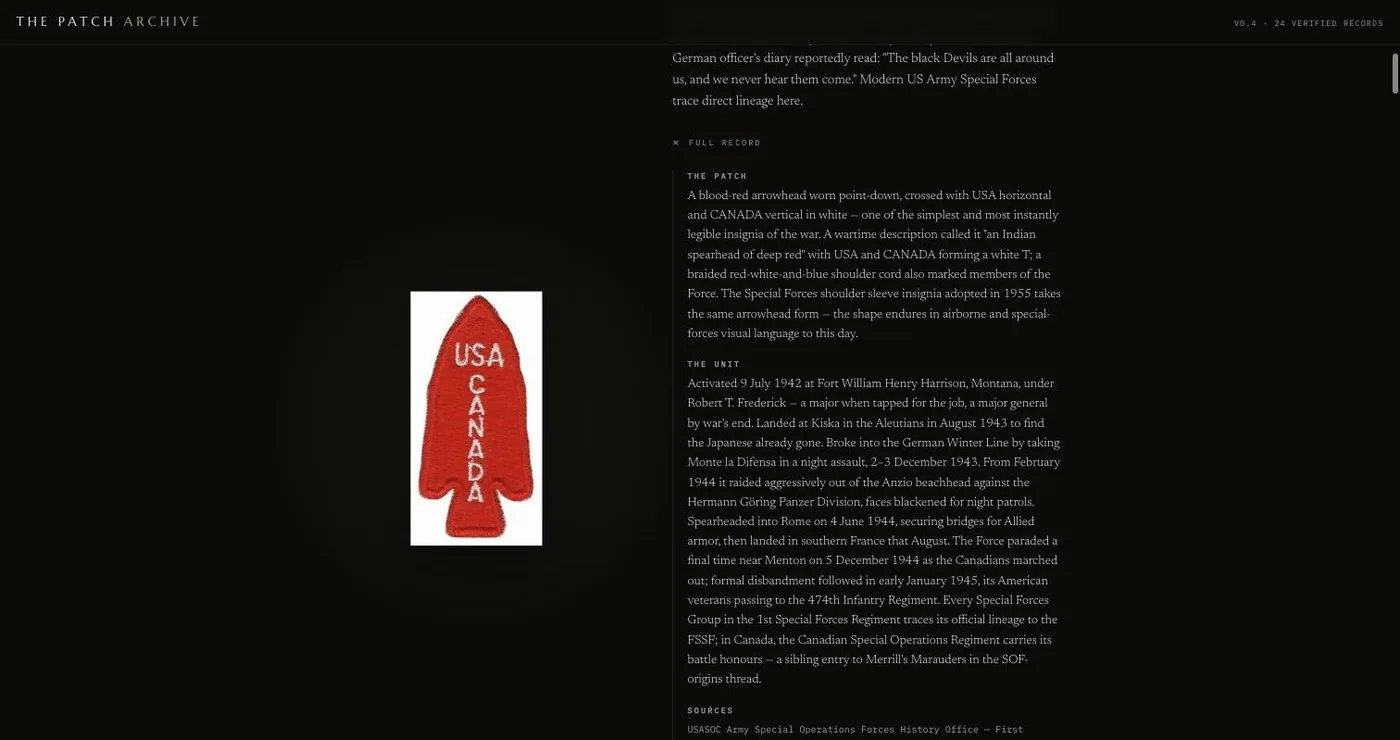
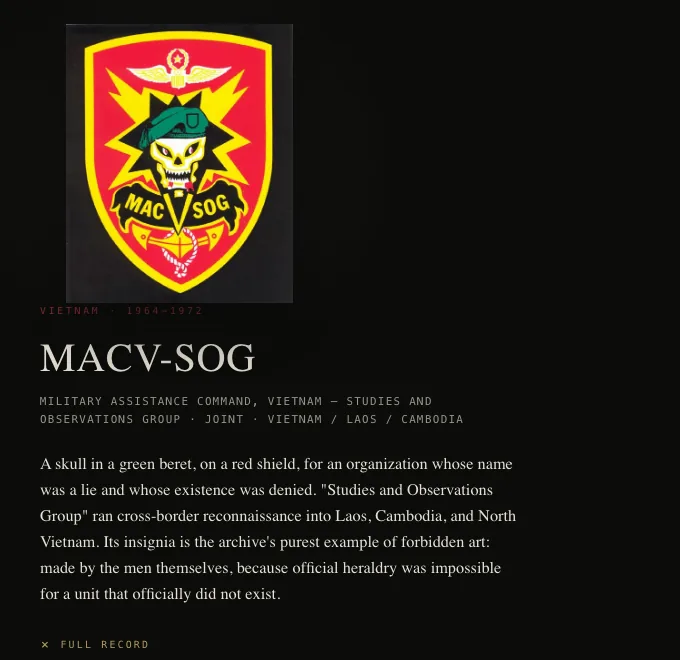
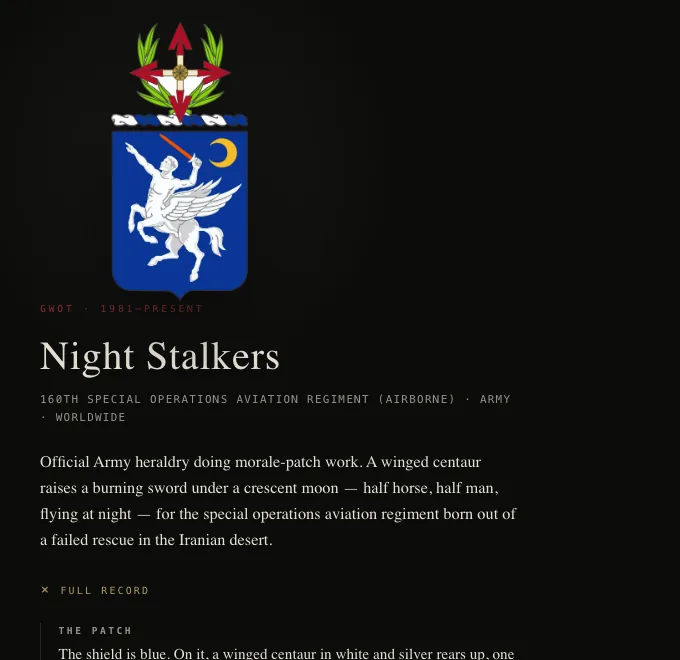
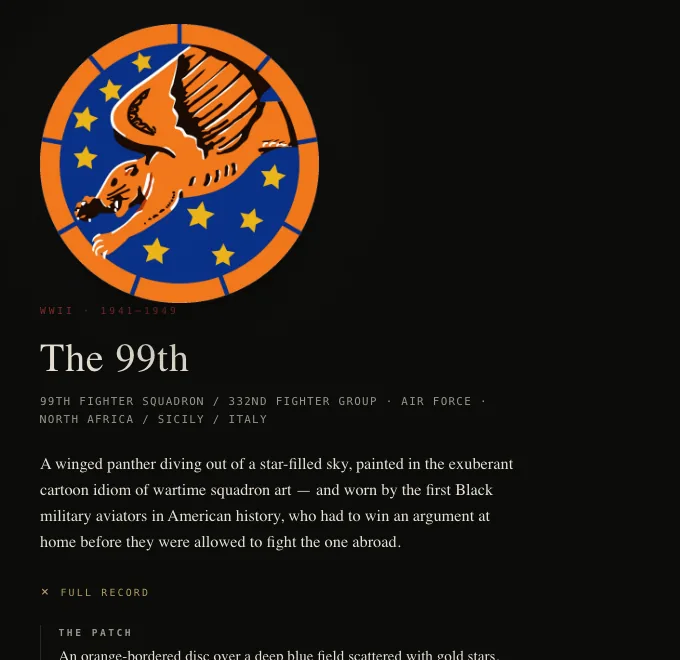
Each patch gets a full screen rather than a slot in a grid, and every record can open to show its blazon, its unit history, and the sources behind both.
The iteration that earned my trust
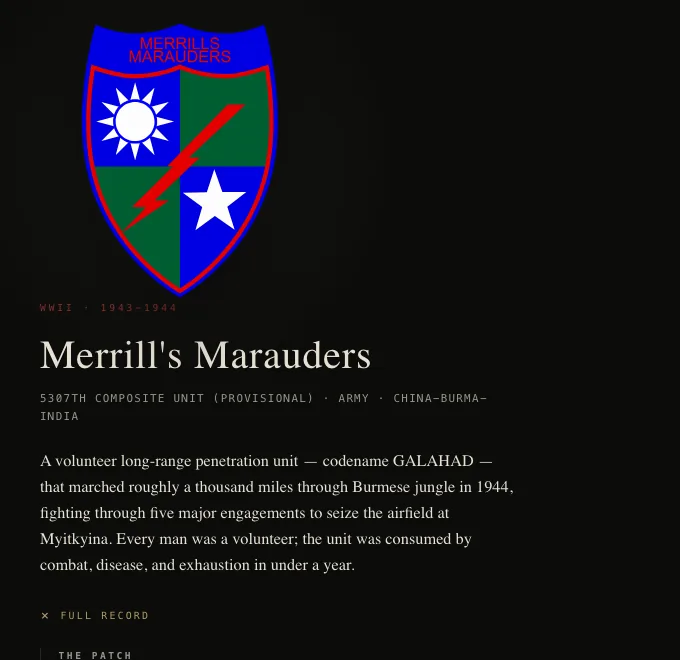
The first pass shipped three seed entries: Merrill's Marauders, the First Special Service Force, VMF-214. Looked great. Then we ran a deep-research verification pass against live institutional sources, and it got humbling:
- The Black Sheep squadron's designation was four years stale. VMA-214 became VMFA-214 in a 2022 redesignation, and half the internet hasn't noticed.
- The Marauders entry gained the official blazon and correct combat-team colors.
- A "victory stars" claim I liked got removed entirely, because we couldn't source it.
That last one is the whole method. The archive is smaller than it could be and right about what it keeps.
What stuck as process
Two standing rules came out of it, written into the project so future sessions inherit them: current-designation claims are the highest-rot facts in this domain, so live-check them at verification time, and artwork ships only with public-domain provenance recorded per entry (Commons CC0, Army Quartermaster Museum scans, official USMC vectors, each documented).
Same pattern as everything else in my OS: taste and the ask are mine, the machine drafts fast, and a verification gate decides what survives. The iteration loop isn't "make it prettier." It's "prove it or cut it."
Where it stands
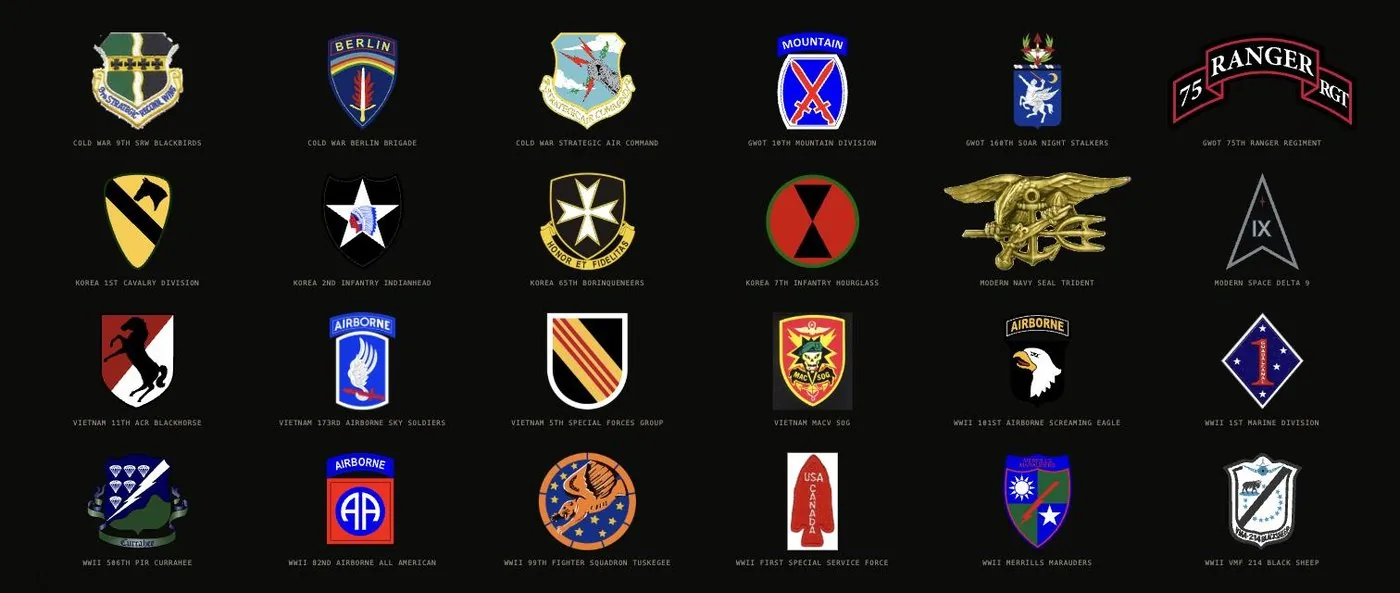
Twenty-four records so far, spanning WWII through today: the 101st and 82nd Airborne, Merrill's Marauders, the Tuskegee Airmen's 99th Fighter Squadron, MACV-SOG, the Borinqueneers, the Night Stalkers, SAC, Space Delta 9.
The site itself isn't public yet. It's coming soon. Everything above is work in progress. The records are real and the pipeline runs, but I'm still building the thing people will actually browse, and I'd rather show where it's at than sit on it until it's finished. When it's ready, it'll go up here first.